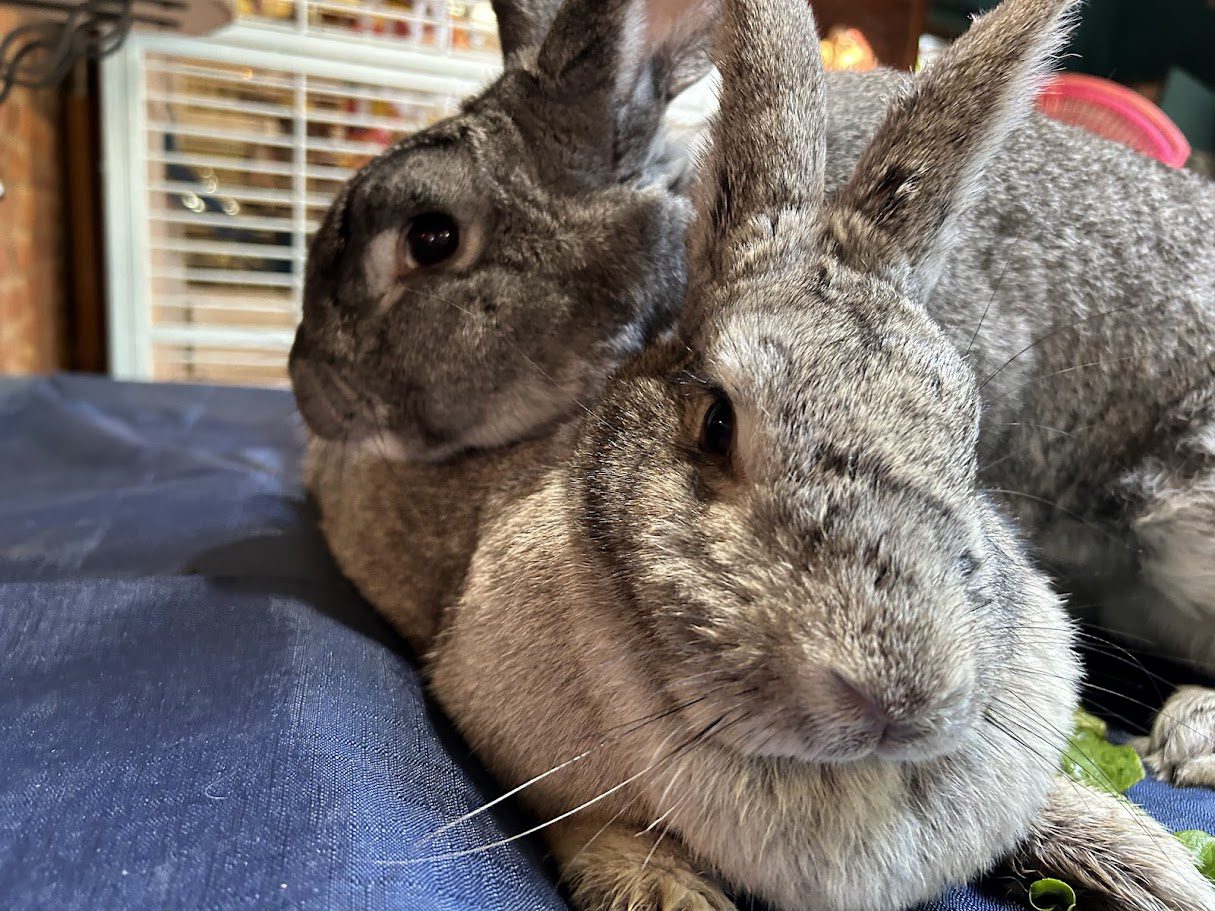
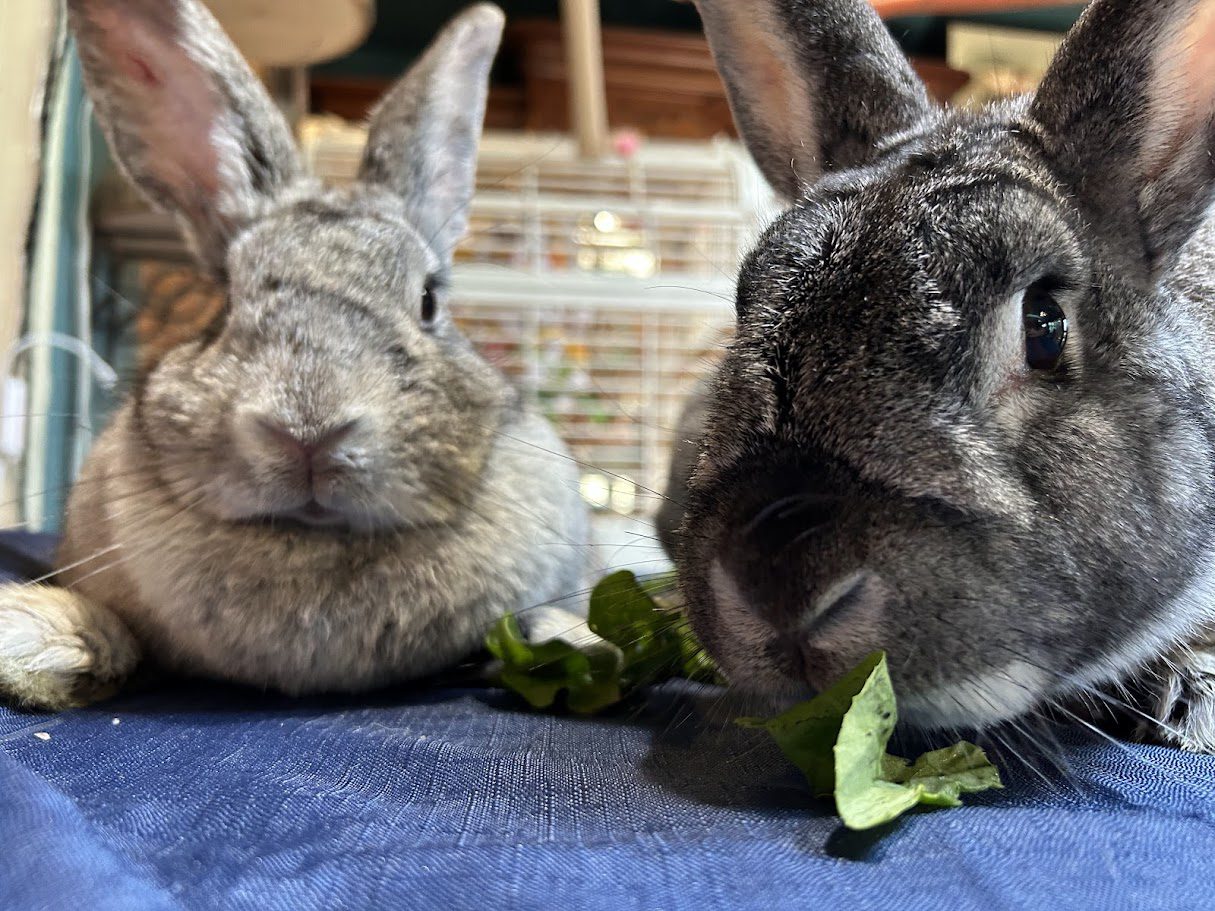
We love chinchilla rabbits! We loved having Susie running around the farm, but sadly we lost her. We’ve been missing that fluffy cuteness, so this summer we tracked down two chinchilla rabbits to join our farm.
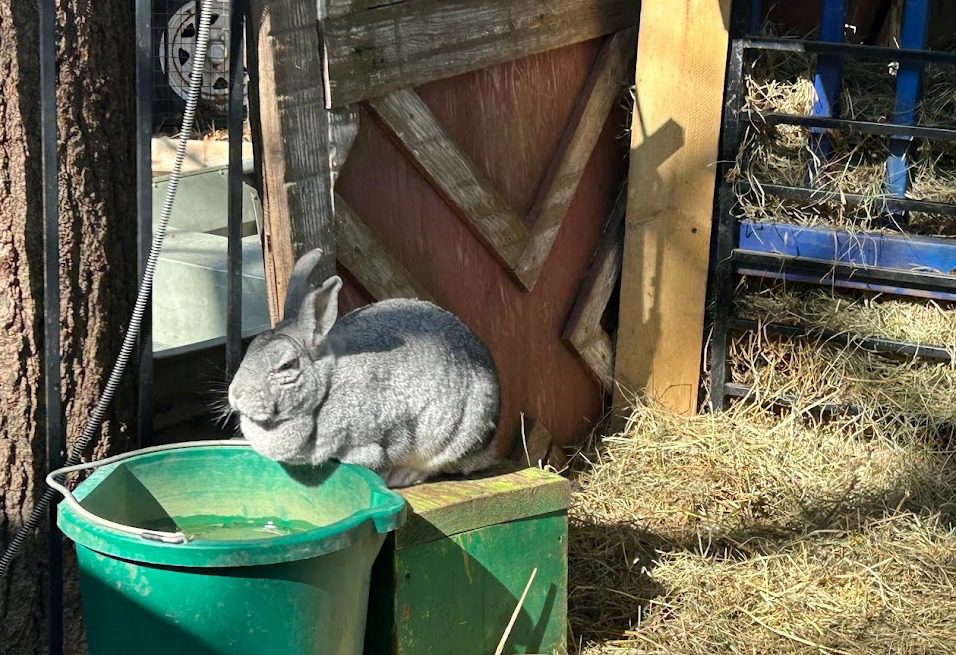
Reasons we love Chinchilla Rabbits:
- They are a fun, large, playful breed who are affectionate and make great pets!
- They have soft, silky salt and pepper colored fur that sheds for about a week in the spring and fall
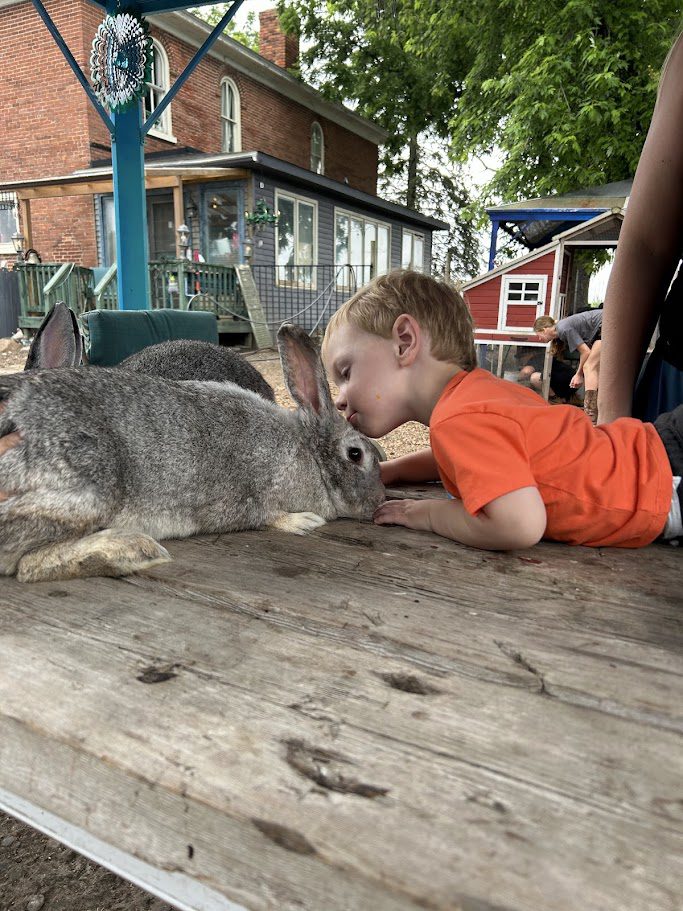
- They have a pretty mellow and pleasant temperament and tolerate handling and children
- They are sweet, gentle and large – commonly weighing 9-12 pounds unless bred to be giant and large enough to play outside
- They have a lifespan of 5-8 years and are pretty healthy animals
- If litter box trained young, they make great indoor pets
Lingo:
We always find lingo fascinating! Here’s the rabbit world:
A female rabbit is a doe, male rabbit is a buck. A dam is a female rabbit who has given birth to babies which are called kits (kittens), and delivering the babies is kindling of the litter (group of kits).
Chinchilla rabbits are not chinchillas. They are a rabbit breed that were bred originally for meat and their fur, and they look like chinchilla. A chinchilla is a rodent, a Rabbit is a Lagomorph – different species entirely
A Standard Chinchilla is considered a large rabbit, adults weighing as much as 5.5-7.5 pounds. They have a relatively compact body, and fur that “rolls” back into place after you stroke it.
The American Chinchilla is considered a heavy weight rabbit. Their fur rolls like the standard chinchilla. Adults most often weigh more than 9 pounds, sometimes up to 12. This is the rarest of the chinchilla rabbit breeds. They get their chinchilla like coloring from the lack of red hair pigments found in most other rabbits. They do produce yellows (which we see as browns) in their lighter hairs. They are happy and active in cooler temperatures, summer heat and hot unventilated rooms should be avoided. Though the rabbit will need sunlight daily to make vitamin D for healthy bones and teeth.
A Giant Chinchilla is a cross between a Flemish Giant and an American Chinchilla rabbit, often weighing in at 12-16 pounds.
These American Chinchilla Rabbits do need more cage and plays pace than other breeds of smaller rabbits.
Origins of Chinchilla Rabbits
The American Chinchilla Rabbit has roots in France, as the first chinchillas were created in the early 20th century, first debuting in France in April 1913. Two American rabbit breeders bought the show animals after seeing them exhibited at the New York State Fair in 1919 and began a selective breeding program to create large chinchilla rabbits by crossing them with American Blue Rabbits, New Zealand Whites, and White Flemish Giant Rabbits to create today’s American Chinchilla Breed. With the decline of breeding them for meat and fur, the American Livestock Breeds Conservancy has put them on the critically endangered list.
Digestion
Rabbits eat their feces after they first pass through their digestive tract, these are soft black droppings called cecotropes that they eat, often at night. The the second time through a process of hind gut fermentation, they interact with a probiotic bacteria in the rabbits cecum, which converts the fiber in the grass the rabbit eats into fatty acids, then the rabbit will release small hard pellets.
The rabbits digestive tract is very important, if anything gets stuck in their throat they can’t get it out as they are not able to vomit. If they are unable to eat more they may starve if they can’t get the vital nutrients, especially those that weren’t extracted on the first pass through the digestive tract. It’s also important not to overfeed a rabbit or offer too many foods that may impact their digestive system.
Diet
A rabbits diet should be 70% hay, which is important for digestion and prevention of dental issues
Leafy greens can be offered, but limit to 10% of their intake
Rabbit pellets should be offered daily for essential nutrients.
Litter Box Training
A rabbit should have a clean litter box that doesn’t carry the scent of another animal. They hay used in the litter box can be the same as the hay in their diet, timothy grass, bermuda grass (brome), oat hay, or orchard hay. Orchard hay is too high in calories to be a rabbits only source of grass, as well as alfalfa which is best for only yough growing rabbits or angroa rabbits who grow wooly coats. Pine shavings can work well as a base layer. Never use CEDAR shavings for any kind of rabbit bedding.
Litter box training works on rabbits that have been spayed or neutered. A sexually mature rabbit will likely pee and poop as part of their instincts, as that is how they gain the attention and attract a mate.
Breeding
Female rabbits (called does) release eggs by mating, not by hormone cycles. They are receptive to mating for about 14 out of 16 days. Males are called bucks. When introducing rabbits, the doe should be introduced to the bucks cage. Does are pregnant for 31 days and should have a separate nesting box for comfort and safety for giving birth. When a does is ready to kindle (give birth) they will often pull fur from their dewlap, an extra skin flap under their chin to help create a warm nest for their “kits”. Regular care and feeding is best for the first three weeks of pregnancy, and free choice pellets are best as they get ready to give birth and until the kits are weaned. Oats are a great way to stimulate milk production.
Does only feed their kits twice a day until they are weaned. They will feed them by standing over the kits, and the scent allows the kits to find them. Kits ears and eyes are closed for the first two weeks of birth to protect them from being found by predators.
Rabbits have a duplex uterus, meaning two separate uterine horns each with its own cervix, ovary and fallopian tube. They can become pregnant in both at the same time, and deliver two litters within about 14 days of each other, which is somewhat rare.
Illness
American Chinchilla Rabbits are susceptible to myxomatosis, which is passed from interaction with wild rabbits. The first symptom is puffy eyelids, progressing to pneumonia and death in 7-10 days. There is no cure available – and is most commonly found in wild rabbits in California.