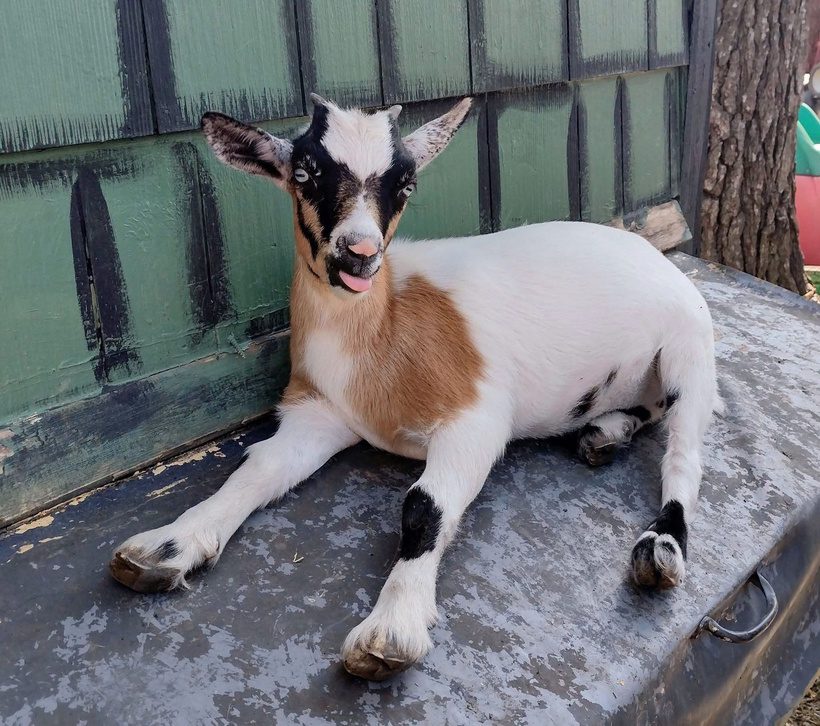

There are few things cuter than a baby Nigerian Dwarf goat. Tiny hooves, ridiculous little hops, zoomies for absolutely no reason—and personalities approximately 14 times larger than their bodies.
Then comes one of the decisions goat owners have to make very early:
Horns or no horns?
Some of the best practical advice we’ve received is pretty simple:
Either everybody has horns… or nobody has horns.
Why? Because goats establish a hierarchy, and their heads are a major part of how they communicate with one another. Mixing horned and hornless goats can sometimes put the hornless animals at a disadvantage when disagreements happen—and with goats, there WILL be disagreements.
THE PROS OF HORNS
Horns are completely natural and serve several purposes.
They can help goats regulate body temperature because blood vessels run through the horn structure. They’re also useful for scratching, reaching an itch and defending themselves.
And let’s face it—horned goats can be absolutely gorgeous.
THE CONS OF HORNS
Horns can also create some management challenges.
They can get caught in fencing, feeders and other surprisingly tiny spaces that a goat will absolutely insist its entire head can fit through.
They can accidentally—or intentionally—injure another goat.
They can also hurt humans even when the goat isn’t trying to be aggressive. A friendly goat swinging its head at exactly the wrong moment can make you rethink every decision you’ve made that day.
THE PROS OF DISBUDDING
Removing the horn buds when kids are very young can reduce the risk of future horn-related injuries and eliminates the possibility of horns becoming trapped in fencing.
A completely hornless herd can also be easier to manage around children, visitors, feeders and tighter spaces.
THE CONS OF DISBUDDING
Disbudding isn’t nothing.
It’s a procedure performed when kids are very young and needs to be done correctly, with appropriate pain management and good technique. There can be complications, including abnormal horn regrowth called scurs, particularly when the horn-producing tissue isn’t completely destroyed.
And once it’s done, there’s obviously no changing your mind and putting the horns back on.
AND THEN THERE’S THE GOAT DRAMA…
Goats have a social hierarchy.
They head-butt.
They shove.
They argue over food.
They argue over sleeping spots.
They argue over who gets to stand on the thing that nobody cared about until another goat stood on it.
Basically, goats wake up every morning and choose drama.
That’s why consistency within a herd can be helpful. A horned herd can live very successfully together, and a disbudded herd can live very successfully together. Mixing the two isn’t automatically a disaster, but it DOES mean paying closer attention to herd dynamics, fencing, feeders and whether one goat is consistently getting bullied.
There isn’t one perfect answer for every farm.
For us, the advice “either everybody has horns or nobody has horns” makes a whole lot of sense.
Whichever way you choose, good management, safe fencing, plenty of feeding space and knowing the personalities in your herd matter enormously.
Because underneath those adorable baby-goat faces are tiny little creatures already preparing for a lifetime of negotiating who is actually in charge.
Spoiler alert:
They all think they are.