
🐓 Guinea Fowl Quick Facts 🐓
- Native to Africa 🌍
- Medium-sized: 4–7 lbs, 24–30 inches long
- Lifespan: 10–15 years ⏳
- Plump, spotted gray feathers with helmet-like casque 🎨
- Social birds—thrive in flocks 🐥
- Loud calls act as natural alarms 🔊
- Active foragers: eat insects, ticks, seeds & vegetables 🥬
- Excellent for natural pest control 🐛
- Need secure fencing, shelter & space to roam 🛠️
- Can be ground-dwellers but may fly short distances ✈️
🐓 General Facts
- Scientific name: Numida meleagris
- Origin: Native to Africa.
- Size: Medium-sized birds; adults weigh 4–7 lbs and are about 24–30 inches long.
- Lifespan: 10–15 years in captivity.
- Popular for pest control, meat, and ornamental purposes.
🎨 Appearance
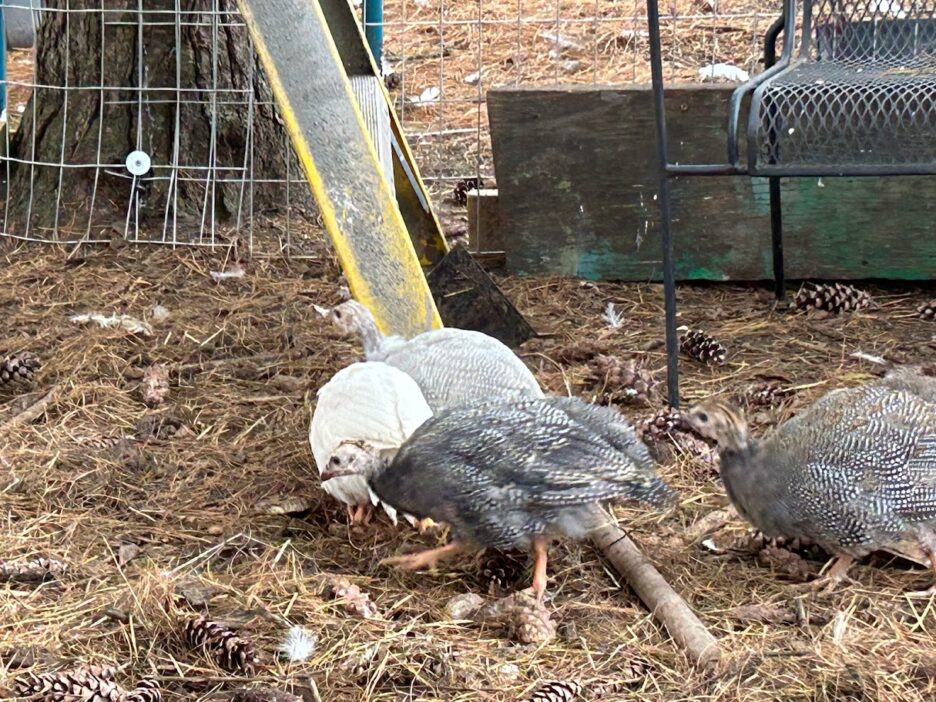
- Plump, round-bodied birds with spotted gray feathers (most common is the Helmeted Guinea).
- Bald head with a helmet-like casque and colorful wattles.
- Some breeds have white, lavender, or pearl coloration.
- Short tail and strong legs with spurs in males.
🏃 Behavior & Personality
- Social, flock-oriented birds—thrive in groups.
- Loud, distinctive calls used as alarm signals to alert of predators.
- Active foragers: eat insects, ticks, seeds, and small plants.
- Can be flighty but are generally ground-dwellers.
🍎 Diet
- Omnivorous: insects, ticks, worms, seeds, grains, and vegetables.
- Excellent for natural pest control, especially for ticks and small insects.
- Fresh water must always be available.
🛠 Care Needs
- Need secure fencing to protect from predators.
- Shelter from extreme weather; perches for roosting.
- Space to roam is important—they love to scratch and forage.
- Regular health checks and parasite control.
🌟 Fun Facts
- Guinea fowl are known as “living lawn mowers” for their foraging habits.
- Their loud calls make excellent natural alarms for farms.
- Helmeted Guinea Fowl is the most common breed kept worldwide.
- Often raised alongside chickens or other poultry for pest control and companionship.
- Can be aggressive toward predators and even snakes.